
I caught myself doing something ridiculous on holiday last week.
I was trying to work out whether I was relaxing efficiently.
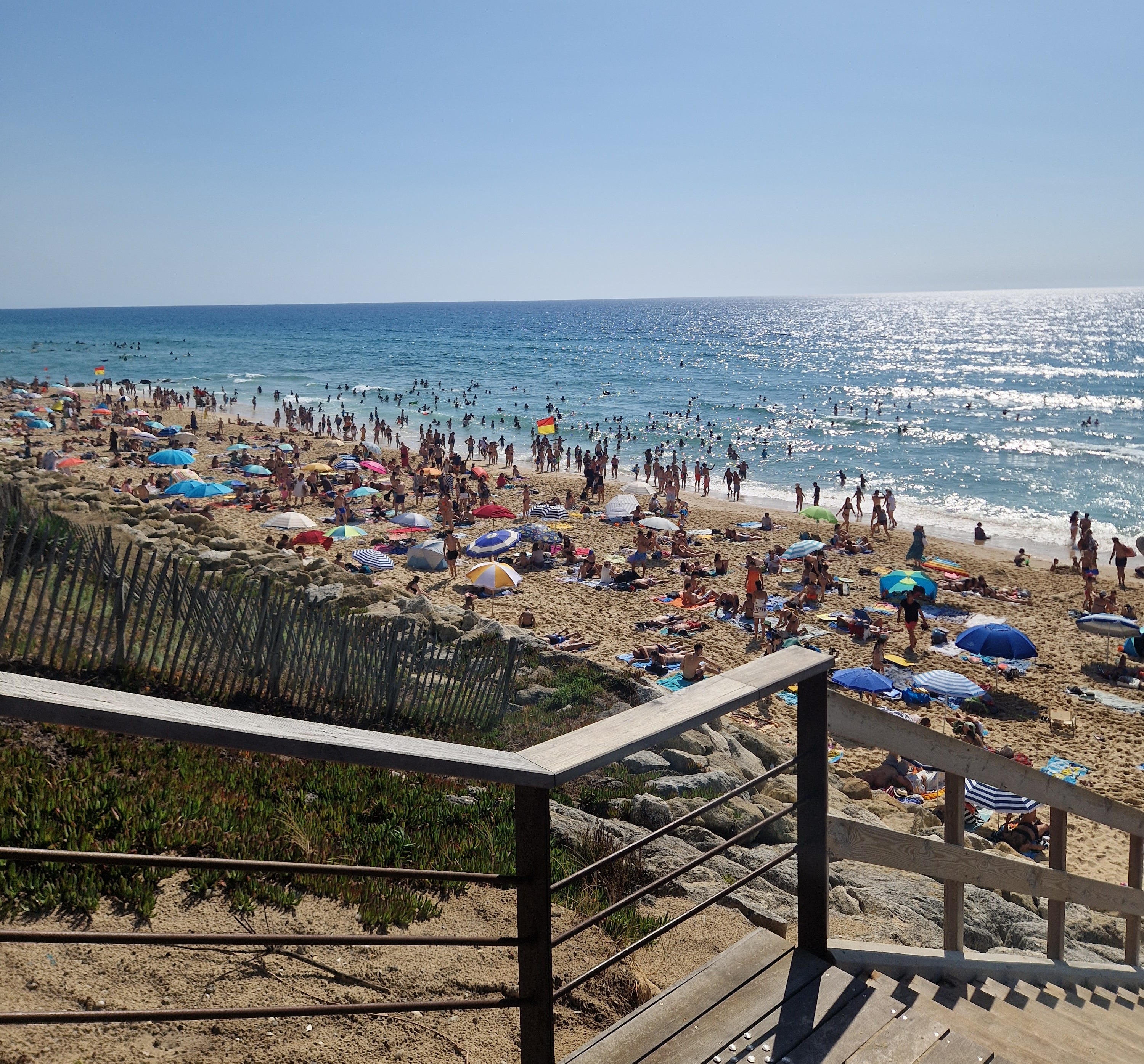
I was in the south of France, and a friend had suggested a second surf session that afternoon. I was weighing it up seriously. Not because I especially wanted to be back in the water, but because another two hours out there would extend the stretch of time I’d gone without looking at a screen.
I found I was running an audit on the whole trip.
Had I read enough?
Was I switching off properly, or only switching off in the way that people who can’t switch off describe switching off?
Was the surfing giving me useful distance from the work, or was I just cold?
Would I come back with better ideas than the ones I left with?
At some point it occurred to me that I had managed to turn doing nothing into another thing I could be bad at.
We’ve all got very good at this. You don’t go for a walk, you clear your head. You don’t read a novel, you read outside your field. You don’t take a three-hour lunch, you recharge. Nobody surfs because surfing is fun. They surf because it improves resilience, presence, focus and creative output. Even leisure has acquired KPIs.
Which brings me to my recent infatuation with all things Italian, mainly cannoli if I’m being honest here. If I can’t eat cannoli regularly, what has all this been about? What am I living towards?
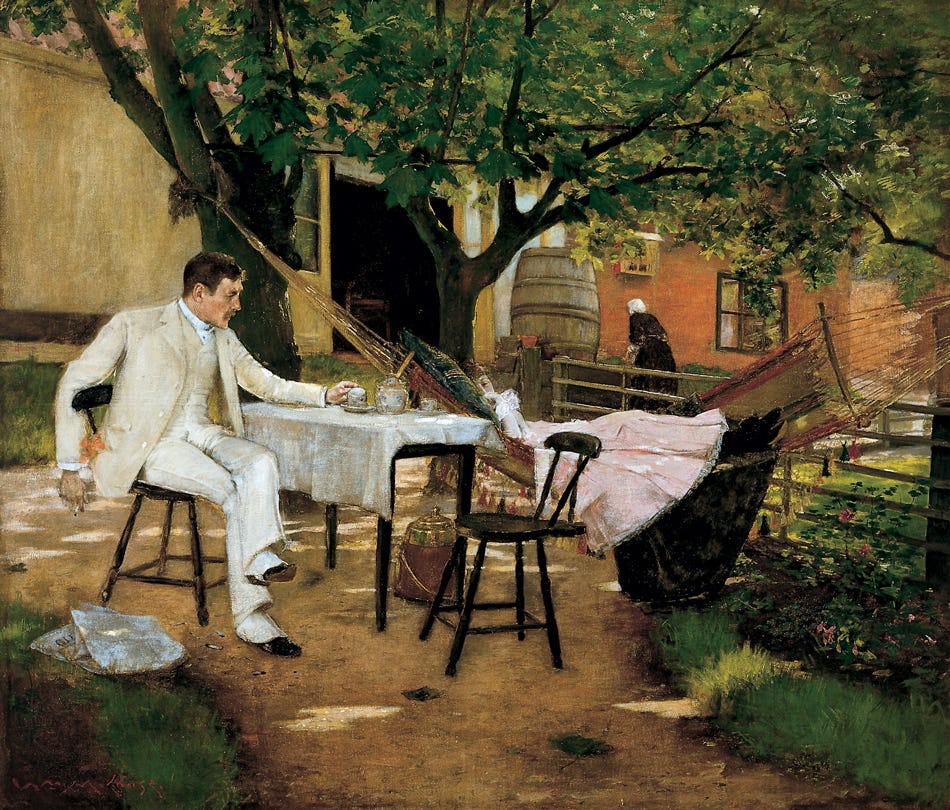
Somewhere behind my determination to ruin my diet is villeggiatura, a word I picked up this summer for the long Italian retreat. By the 1960s an entire culture accepted that doing very little for several weeks was a legitimate way of life. Not a reset, not an investment in Q4 performance. Whole towns emptied out in August and the point of it was the doing of very little. The break was never asked to justify itself, because it hadn’t occurred to anyone to ask.
And this wasn’t a ritual sustained by a country with nothing better to do. Its high point coincided with the miracolo economico, one of the fastest stretches of growth in Italy’s modern history. I don’t think the long holidays caused the boom. A country rebuilding after a war grows fast regardless. The interesting thing is that a country could be building furiously without requiring every hour of every life to account for itself.
That sounds naive from here. I’ve come round to thinking the alternative is the naive one.
The thing underneath it
Most of the founders I work with spent the better part of a career inside someone else’s organisation before they started this. And an organisation supplies something you only notice once it’s gone: external evidence that you are needed. Meetings you didn’t schedule. A calendar filled in by other people. A role that existed on Monday morning whether or not you personally generated it.
Then you go out on your own and the evidence stops arriving. The only remaining proof that you are still the person that career made you is the sensation of progress, and now you have to manufacture it yourself, daily, from scratch.
So you do. Email feels like progress. Tweaking the deck feels like progress. Industry news feels like progress. Another networking coffee really feels like progress. None of it moves the company. All of it produces the sensation.
I’ve started calling it proof-of-life work. Its function isn’t to advance anything. Its function is to demonstrate that you still exist.
Which is why stopping is so hard for this founder specifically, and it has nothing to do with hustle or discipline or work ethic.
It’s exposure.
Two weeks of doing nothing forces you to sit with the possibility that the company slips: that progress halts, that the ground you gained in June quietly goes, that someone else raises while you sit still, and that stopping has a price you will be paying in October.
Underneath that sits a quieter worry, and it is the one that actually keeps him at the desk. If you stop and the company turns out to be fine, then some meaningful portion of what you do all day was never load-bearing.
That isn’t the disaster. That’s the finding.
Because when you come back, you find out which problems survived your absence. Most won’t have. The thing you were turning over on the 3rd is obviously unimportant by the 12th. The client waited until Monday and was fine. The decision you’d been agonising over got made by circumstance while you weren’t looking. The ground you gained in June is still there. The price you were going to pay in October does not arrive.
Two or three things are still standing exactly where you left them, untouched by two weeks of anyone’s attention. Those were the real ones all along. You just couldn’t see them past everything else.
You cannot get that list any other way. Working through August is the one reliable method of not getting it.
And there’s an August version of this in every raise
I’d bet at least one of you is living through it as you read this.
You sent the deck in late July. It’s the 20th. You’ve heard nothing.
Here is what is most likely happening on the other side: not very much. Half the partnership is away. The associate who would have written the first-pass note isn’t writing anything until September. Nobody is quietly going off you, because going off you would require someone to have thought about you this month.
But silence with no information in it is unbearable when you have been manufacturing your own sensation of progress since January. So you manufacture movement. Another update. A metric nobody asked for. A gentle follow-up. Perhaps a slightly different framing of the round.
And for the first time in the sequence, you’ve created something that actually can do you damage. The silence couldn’t touch you. Nothing about your position had changed. And then you changed it, from a beach, for no reason, in August.
Your raise survives your absence too. It just doesn’t feel like it does.
One Question
So: no framework this week. No protocol for disconnecting properly, no five books, nothing to schedule. That would rather defeat the purpose.
Only the question, for when you get back.
What was still standing?
Clipped
A Sunday on the Italian island of Capri, “filmed in 3D” and shown at Venice, because in 1953 that was the part worth explaining.
Nobody thought to explain the Sunday.
Worth a few minutes.
Written from the other side of the table